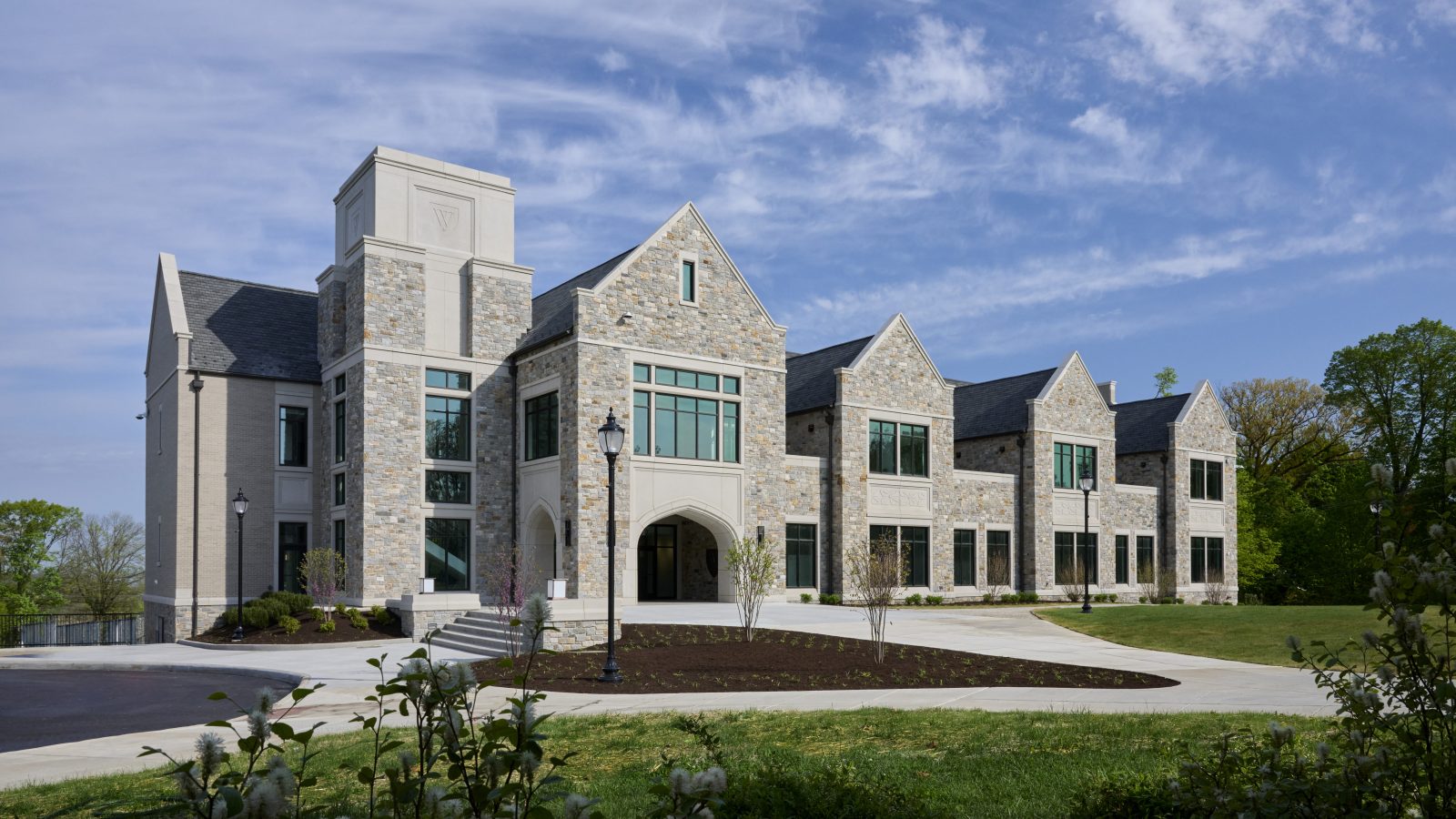
On May 27, 2026, Westminster Theological Seminary (WTS) celebrated the completion of their new academic building, Westminster Hall, with a ribbon cutting. This campus-wide project, which encompassed demolition, extensive sitework, and the construction of the three-story building, adds approximately 30,000 square feet of offices, classrooms, state-of-the-art studio space, and common areas to the seminary’s campus.
Supporting Westminster’s global mission
While Westminster hosts a local student body on their Glenside campus, the majority of their students reside in various countries across the globe. Being able to unify in-person teaching with effective virtual learning was of paramount importance throughout the design of Westminster Hall. Extensive sound mitigation is found throughout the new building, enhancing the quality of virtual calls and the development of video and audio materials used to connect the seminary globally. The classrooms also utilize AI-powered cameras and conferencing systems to create a seamless classroom experience for all global students.
Honoring the campus’ history
The new academic building takes the place of Van Til Hall, which was used by students and faculty for the past fifty years. While the demolition of this building, conducted before construction of Westminster Hall began, was a bittersweet moment for the seminary, the legacy of Van Til continues in the new construction. The lobby and conference room are both named after the seminary’s co-founder.
With structures on campus dating back to the early 1930s, WTS wanted to ensure that Westminster Hall would blend with the existing buildings on campus. To achieve this look, Burkey used a combination of precast concrete panels and hand-laid, locally sourced Wissahickon schist to develop a stone blend unique to Westminster for the façade.
The project team created an exterior mock-up before any construction occurred to ensure all work would match the architect’s design intent and fulfill the owner’s expectations.
A place for community
A key component of Westminster Hall’s main floor is the emphasis on community spaces. The three main classrooms are separated by folding partitions, which will be opened weekly so that the seminary can conduct chapel together. Outside these spaces, a café and lounge provide ample room for students to come together outside of their studies. The sound mitigation measures throughout the building ensure that conversations occuring in the café will not transfer into the classrooms.
Burkey partnered with Ayers Saint Gross, Reese Hackman Engineering, DCI Engineers, Wilkinson APEX Engineering Group, and Jonathan Ceci Landscape Architects on this project.